
AC Refrigerant Leak? 5 Signs Your Air Conditioner Needs Service
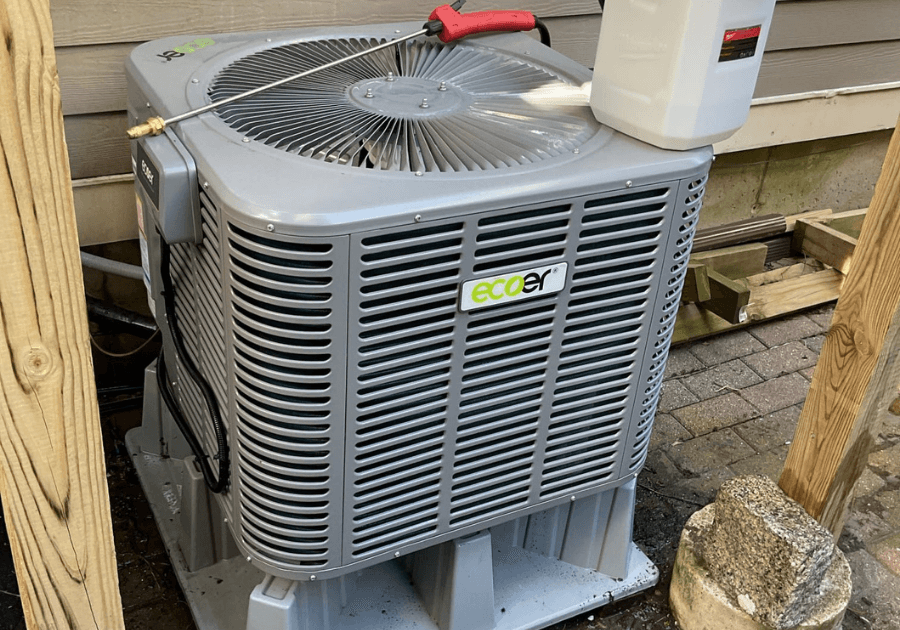
If your AC is blowing warm air, it’s tempting to think it just needs a refrigerant “top-off,” like filling a gas tank. But that’s one of the biggest myths in HVAC. Your air conditioner is a closed-loop system, which means in a properly sealed system, refrigerant isn’t ‘consumed.’ If levels are low, that typically indicates a leak or an installation/service issue.
If you’re low on refrigerant, it’s not because your AC “used it up.” It’s because there’s an AC refrigerant leak somewhere in the lines.
Why an AC Refrigerant Leak Is a Serious Problem
Think of refrigerant as the lifeblood of your AC. This special compound circulates through the system’s coils, pulling heat from your Boston home and sending it outside. When a leak causes the refrigerant level to drop, your AC’s ability to move that heat is impeded.
To compensate, the system has to run much longer and work much harder just to try and keep up with the temperature you’ve set on the thermostat. This creates a domino effect of problems you can’t afford to ignore.
Performance and Financial Consequences
That constant strain won't just leave your home uncomfortably warm during a summer heatwave. It can also cause a noticeable spike in your electricity bills as the system uses more energy trying to do its job.
Worse yet, an untreated AC refrigerant leak puts immense stress on the heart of your system: the compressor. Forcing the compressor to run with low refrigerant can cause it to overheat and fail. That turns what could have been a straightforward repair into a potentially expensive system replacement.
The Environmental Impact
Beyond the damage to your AC and your wallet, refrigerant leaks can cause environmental harm. Many residential AC units in the Greater Boston area still use refrigerants that are considered greenhouse gases.
According to EPA data, some systems can leak refrigerant over time, releasing emissions that contribute to global warming. You can learn more about refrigerant regulations and their environmental effects to see why preventing leaks is so critical.
An AC that is low on refrigerant is not "using it up" like gasoline in a car. It means there is a breach in the system. Simply adding more refrigerant without finding and fixing the source is only a temporary, expensive fix that ignores the root problem.
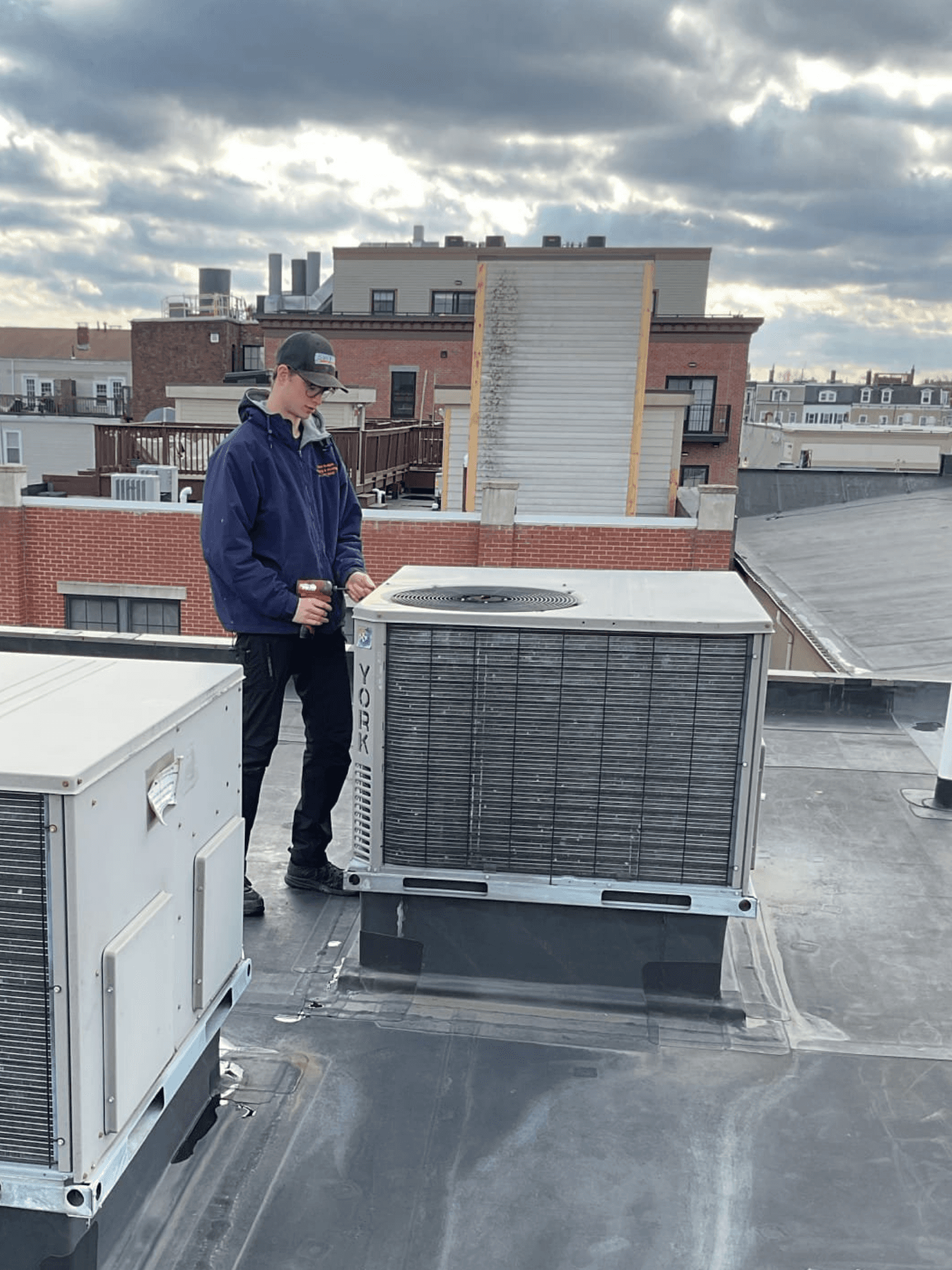
Is It a Refrigerant Leak? Quick Symptom Checker
Symptom | Common Cause | Potential Refrigerant Leak Indicator? |
AC runs but blows warm air | Dirty filter, thermostat issue, clogged drain line | High. This is the classic sign of low refrigerant. |
Ice or frost on refrigerant lines | Restricted airflow (dirty filter or blocked vents) | High. Low refrigerant levels cause pressure to drop, resulting in the coils becoming too cold. |
Hissing or bubbling noises | Normal operational sounds | Medium. A distinct hissing sound near the unit could indicate escaping refrigerant. |
Higher-than-normal electric bills | Dirty filter, aging system, extreme weather | Medium. The system runs longer to compensate for poor cooling. |
AC cycles on and off frequently | Oversized system, dirty filter, thermostat placement | Low to Medium. Low refrigerant can sometimes cause short cycling. |
Water is leaking around the indoor unit | Clogged drain line | Medium. A frozen evaporator coil (from a leak) can cause excess water when it thaws. |
Ignoring the signs of a leak is never a good idea. Getting a professional to perform an AC refrigerant leak repair is the only way to restore your comfort, protect your system from major failure, and do your part for the environment. If you notice any of these red flags, it’s time to call in an expert.
The Five Signs of an AC Refrigerant Leak
An AC refrigerant leak is more than just a minor hassle; it’s a clear sign your cooling system is in trouble. While the effects can feel sudden, the warning signs often build up over time. Learning to spot them early can save you from a complete system breakdown during a Boston heatwave and help you avoid a much bigger repair bill.
If you think something’s wrong, keep an eye out for these five common clues that point straight to low refrigerant and the need for a professional AC refrigerant leak fix.
Warm Air Coming From Your Vents
This is easily the most obvious and frustrating symptom. Your air conditioner is running, but the air blowing from the vents is lukewarm or not cold at all. A lack of refrigerant is almost always the prime suspect here.
The refrigerator’s whole job is to remove heat from your indoor air. When there isn’t enough of it moving through the evaporator coils, your system simply can’t absorb heat the way it should. No matter how low you set the thermostat, your AC won’t be able to deliver the cool air your home needs.
Ice Buildup on the Coils or Lines
It sounds backward, but a lack of refrigerant can cause parts of your AC unit to freeze completely. You might see a layer of frost or even thick ice caked onto the copper refrigerant lines or the evaporator coil, which is the indoor part of your system.
Here’s what’s happening: when refrigerant levels get too low, the pressure inside the system drops. That pressure drop causes the remaining refrigerant to get intensely cold, well below freezing. As warm, humid air from your house passes over those super-chilled coils, the moisture in the air freezes on contact.
A frozen coil is a serious red flag. It completely blocks airflow and stops all cooling, but the weight of the ice can also bend delicate fins and damage your system. Never try to scrape or chip the ice off. The best first move is to turn your AC off and let it thaw out naturally.
Hissing or Gurgling Noises
Your air conditioner should make a steady, familiar humming sound when it runs. If you suddenly start hearing new or strange noises, it’s time to pay attention.
Hissing: A clear hissing or whistling sound, often near your indoor or outdoor unit, can indicate refrigerant gas escaping from a small crack or hole in a line.
Gurgling: If you hear bubbling or gurgling, it might mean air has gotten into the refrigerant lines. That’s a sign that the sealed system has been breached.
These sounds may signal it's time for an immediate AC refrigerant leak repair.
Your Energy Bills Are Suddenly Higher
Have your last few electricity bills been shockingly high, even for a summer month? A hidden AC refrigerant leak could be the reason.
When your system is low on refrigerant, it has to work much harder to try to cool your home. To make up for its poor performance, the air conditioner runs for much longer stretches, trying to reach the temperature you set on the thermostat. All that extra runtime can drive up your energy use and lead to a painful utility bill.
The AC Runs and Runs Without Shutting Off
Much like the high energy bills, you might just notice that your AC seems to be on all the time. On a mild day, you could hear the unit kick on and run for an hour or more just to drop the temperature by a single degree.
This is a classic sign of inefficiency caused by a leak. A system with the right amount of refrigerant should cool your home down and cycle off in a reasonable amount of time. If it’s running constantly, it’s struggling.
What Causes Refrigerant Leaks In Boston Homes
An AC refrigerant leak rarely just happens on its own. It’s always caused by a physical break or weak spot somewhere in the sealed refrigerant lines. Knowing the common culprits helps you understand the risks and why a little bit of maintenance can go a long way.
In a place like Greater Boston, our air conditioners face unique challenges beyond the usual mechanical wear and tear.
Corrosion From The Elements
One of the most common reasons for an AC refrigerant leak is corrosion, especially on the outdoor unit. Here in coastal New England, our weather can put our equipment to the test.
Salty Coastal Air: If you live in Boston or any of the surrounding coastal towns, salt in the air can slowly corrode the coils and fins on your outdoor condenser over many years.
Freeze-Thaw Cycles: Our harsh winters can create a punishing cycle. Moisture freezes on the coils, expands, and then thaws. This constant expansion and contraction puts stress on the metal, which can eventually lead to tiny cracks.
After a few years of this, those small cracks can get big enough to let refrigerant start escaping. You can’t stop the weather, but regular cleaning and professional tune-ups can definitely slow down this process.
Normal Wear And Tear
Your AC unit vibrates when it runs. The constant vibration from the compressor and fan motors over the years can slowly loosen threaded connections and fittings.
That nonstop rattling can cause connections in the refrigerant lines to become just loose enough to let refrigerant seep out, creating a slow leak that’s often tough to spot.
Accidental Physical Damage
That big metal box in your yard is tough, but it’s not invincible. We see leaks caused by simple accidents right in the homeowner's own yard.
A lawnmower can kick up a rock and ding the lines, or a weed whacker can damage the delicate aluminum fins. Even shrubs and bushes planted too close can trap moisture and leaves against the unit, creating a perfect spot for rust to form. Keeping a clear two-foot space around your condenser is a simple, effective way to prevent this kind of damage. And if you're thinking about upgrading to a more modern, efficient system, check out our information on installing mini-split and ductless units to explore newer options.
The Financial And Environmental Risks Of Ignoring A Leak
A small AC refrigerant leak might not feel like an emergency, especially if your system is still blowing some cool air. But letting it go can be an expensive mistake. The risks aren't just about your wallet; they also affect the environment.
When your system is low on refrigerant, it has to work much harder to keep you cool, potentially driving up your monthly energy bills. More importantly, it puts a massive strain on your air conditioner’s most vital and expensive component: the compressor.
From Small Leak To Major Failure
Think of the compressor as the heart of your AC system. It's designed to pump a specific amount of refrigerant through the lines at a precise pressure. When a leak causes the refrigerant level to drop, the compressor is forced to run longer and harder just to try to keep up.
This constant overwork can cause the compressor to overheat, leading to part failure. What started as a manageable leak can snowball into a major breakdown. Replacing a failed compressor can be so expensive that it often makes more sense to replace the entire outdoor unit.
Environmental Consequences Of Refrigerant Leaks
The financial hit is bad enough, but the environmental toll is a major concern. The refrigerants used in most home air conditioners, like R-410A and the older R-22, are powerful greenhouse gases.
These substances have a high Global Warming Potential (GWP), which means they are far more effective at trapping heat in the atmosphere than carbon dioxide.
To put it in perspective, the common refrigerant R-410A has a GWP of over 2,000, according to the EPA. That means releasing just one pound of it into the atmosphere is equivalent to emitting over 2,000 pounds of carbon dioxide. A typical home AC can hold between 5 and 20 pounds of refrigerant, so that a complete leak can have a significant environmental footprint.
Why Professional Handling Is A Must
Because of these environmental risks, the U.S. Environmental Protection Agency (EPA) strictly regulates the handling of refrigerants. Refrigerant handling is regulated, and homeowners should have leaks diagnosed and repaired by EPA-certified technicians. This is absolutely not a DIY job.
Trying to "top off" a system on your own is illegal in many cases and can also be unsafe. A licensed technician has the training and specialized tools to find and fix the leak correctly, safely recover any remaining refrigerant, and recharge the system to the manufacturer’s exact specifications.
Getting a leak fixed promptly by a pro isn't just about getting your cool air back. It’s about protecting your investment, your budget, and the environment.
How A Professional Finds And Fixes An AC Refrigerant Leak
Fixing an AC refrigerant leak is much more involved than simply adding more refrigerant. A real, lasting repair requires a licensed technician to follow a careful, step-by-step process to find the source of the problem, seal it, and get your system running as the manufacturer intended. This is precision work, which is why handling refrigerants requires EPA certification and specific tools.
Ignoring a leak, even a small one, is a recipe for bigger problems. What starts as a financial headache can easily become a major system failure if you let it go.
Step 1: Pinpointing The Leak
The first and most critical job is finding the exact source of the leak, which can be as tiny as a pinhole in a copper line. A pro has a few different methods to hunt it down:
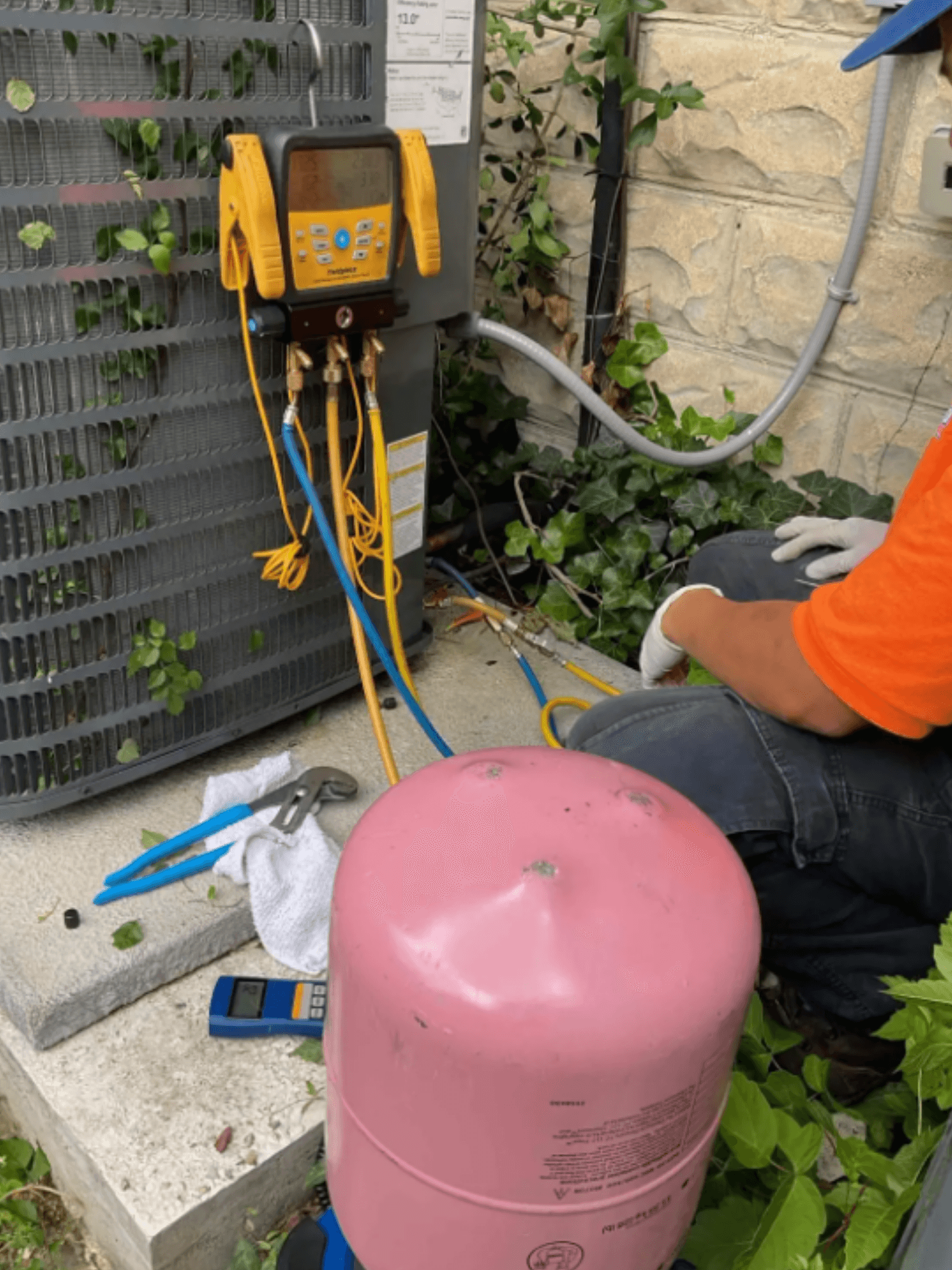
Electronic Leak Detector: This handheld tool emits an alarm when it detects refrigerant gas, allowing a technician to methodically scan coils and lines to pinpoint the leak's location.
Ultraviolet (UV) Dye Test: For very small leaks, a technician might add a special fluorescent dye to the refrigerant. After the system runs for a bit, they'll use a UV light to scan the components. Any dye that has escaped will glow brightly, making even the smallest leak visible.
Soap Bubble Method: A simple soap-and-water solution is applied to joints and suspected areas. If there’s a leak, escaping refrigerant will create visible bubbles, confirming the exact spot.
Step 2: Making The Repair
Once the leak is found, it’s time to fix it permanently. For a small hole in a copper refrigerant line, the typical method is brazing, a high-temperature soldering process that creates a strong, durable seal. If the leak is at a threaded fitting, it might just need tightening or a seal replacement.
A proper repair means permanently fixing the compromised part of the system so the problem doesn't come back.
Step 3: Pressure Test And Vacuum
After the repair is made, the job is not over. First, the technician will pressurize the system with inert nitrogen gas. This confirms that the repair is 100% sealed and can hold pressure.
Next, they hook up a powerful vacuum pump to pull out all air, moisture, and other contaminants from the refrigerant lines. This is a non-negotiable step. Moisture is a major enemy of an AC system, as it can mix with refrigerant to form corrosive acid that damages your system from the inside out.
Step 4: Recharging The System
Only after the system is proven to be sealed tight and completely clean and dry inside will the technician recharge it. They use digital scales and gauges to add the exact type and amount of refrigerant, per the manufacturer’s precise specifications. Getting this charge right is key to making sure your AC runs efficiently and effectively.
This careful, by-the-book process is a core part of our expert AC and cooling services.
Repair or Replace? How to Decide When Your AC Is Leaking
Getting a large repair quote for an AC refrigerant leak can leave you wondering whether to pay for the fix or replace the whole system. This is a big financial decision, but a few key pointers can help you make the right call for your Boston home.
One helpful rule of thumb in the HVAC industry is the "5,000 Rule." It’s a simple bit of math that gives you a quick guideline on repair costs.
(Age of AC Unit in Years) x (Cost of Repair) = Your Guideline Number
If your final number is over 5,000, replacement may be a smarter long-term investment. For instance, say your 10-year-old air conditioner needs a $600 repair. That gives you a score of 6,000. In that scenario, putting your money toward a new, more efficient system could make more financial sense.
Factors Beyond The Math
The 5,000 Rule is a great starting point, but it's not the whole story. A good technician will walk you through these points, but it helps to have them on your radar.
System Age: Most central air conditioners have a lifespan of about 15-20 years. If your unit is approaching that age, a smaller repair might just be a temporary fix before another part fails.
Type of Refrigerant: Is your system still running on R-22 refrigerant? This older coolant is being phased out for environmental reasons and has become very expensive. A serious leak in an R-22 system is a major red flag that it’s time to upgrade.
Overall Condition: Think about the unit’s history. Has it needed frequent repairs? Do you see significant rust or corrosion on the outdoor unit? These are clear signs it’s reaching the end of its useful life.
Local Rebates and Incentives: A new, high-efficiency system might be more affordable than you think. Programs like Mass Save may offer significant rebates for upgrading to energy-efficient heat pumps and air conditioners, thereby reducing the upfront cost of a new system.
Making the final call between repairing and replacing can feel overwhelming. But when you combine the 5,000 Rule with these other real-world factors, you can make a confident, budget-smart choice that will keep your home comfortable for years.
Answering Your Top Questions About AC Refrigerant
When you think you have an AC refrigerant leak, it’s natural to have a lot of questions. We hear the same concerns from homeowners all over the Boston area, so let's get you some clear, straightforward answers.
Can An AC Leak Be Prevented?
While you can’t completely stop the natural wear and tear caused by years of vibration and use, you can certainly reduce the risk of a leak. The single best thing a homeowner can do is commit to regular, professional maintenance.
During an annual tune-up, a technician will clean your coils, check the system’s pressures, and look for early signs of corrosion or weak spots before they become a full-blown leak. You can see everything that’s involved in our complete guide to HVAC maintenance.
How Much Does It Cost To Fix A Refrigerant Leak?
The cost to fix an AC refrigerant leak can vary. A simple fix, like tightening a loose valve on an easily accessible part, might only be a few hundred dollars. On the other hand, a complex repair that involves brazing a pinhole leak inside a coil and then fully recharging the system will cost significantly more.
The final price generally depends on the leak's location, the extent of the damage, and the type and amount of refrigerant your specific system needs. A clear diagnosis from a professional is key.
Is A Refrigerant Leak Dangerous To My Health?
For the most part, a small refrigerant leak in a well-ventilated house is not an immediate, severe health hazard. The bigger concern is that refrigerant is heavier than air and can displace oxygen if it builds up in a small, enclosed space, such as a basement utility closet. Large leaks in confined spaces can create safety concerns. Ventilate and leave the area if you suspect a major release.
If you hear a loud hissing noise and think you have a major leak, the smartest move is to open some windows to ventilate the area and step outside for fresh air. If you are experiencing health symptoms that you believe could be related, speak with a medical professional and address the potential home safety issue.
The more significant risk is to the environment. These chemical compounds are powerful greenhouse gases, which is why the EPA requires technicians to be certified to handle and dispose of them safely.
An AC refrigerant leak is one of those problems you can’t afford to ignore. If you’ve spotted any of the signs we covered in this guide, it’s time to bring in a professional.
For an expert diagnosis and honest repair options in the Greater Boston area, you can trust the licensed team at Boston Budget. Call us today to schedule your service.
Boston Budget is a locally owned plumbing, heating, and cooling company proudly serving homeowners in Boston, Quincy, Dorchester, Weymouth, and the surrounding communities. We specialize in boiler maintenance, heating repairs, and energy-efficient HVAC upgrade designed to keep your home safe, comfortable, and affordable, especially during harsh New England winters. With reliable service, transparent pricing, and fast response times, Boston Budget is your trusted local choice for plumbing and heating solutions.


