Why Should I Schedule an HVAC Tune-Up Service Every Year?
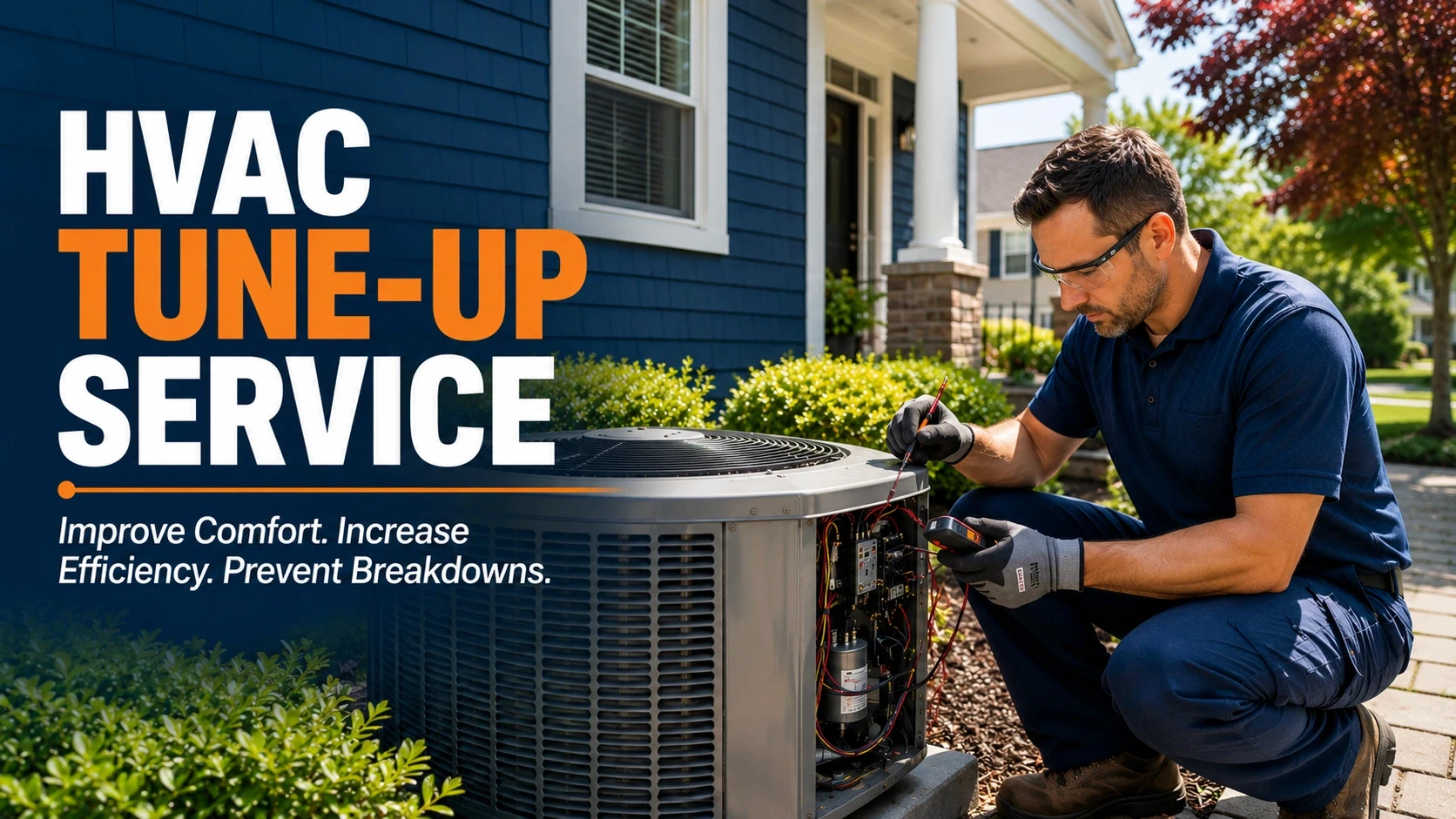
Your HVAC system is one of the hardest-working systems in your home.
It keeps your family comfortable during humid summer afternoons, freezing winter mornings, and everything in between.
Because heating and cooling equipment operates throughout much of the year, it's easy to forget that every cycle places wear on motors, electrical components, moving parts, and safety systems.
Most homeowners don't think about scheduling service until something stops working.
Unfortunately, breakdowns often happen during periods of extreme weather, when HVAC systems are under their greatest demand and service schedules are busiest.
An annual HVAC tune-up helps reduce that risk.
Rather than waiting for equipment to fail, preventative service identifies developing problems early while improving efficiency, comfort, and overall system performance.
Whether your home uses a furnace, boiler, heat pump, central air conditioner, or a complete HVAC system, regular tune-ups are one of the simplest ways to protect your investment while reducing the likelihood of unexpected repairs.
What Is an HVAC Tune-Up Service?
An HVAC tune-up is a preventative maintenance service performed by a qualified technician to evaluate the overall condition of your heating and cooling system.
Unlike an emergency repair, the goal isn't to fix a specific problem.
Instead, the objective is to verify that the equipment is operating safely, efficiently, and reliably while identifying small issues before they become major repairs.
Think of an HVAC tune-up the same way you think about routine maintenance for your vehicle.
Even when your car appears to be running normally, regular inspections help prevent breakdowns, improve performance, and extend its lifespan.
Your HVAC system benefits from the same proactive approach.
Benefits of Annual HVAC Tune-Ups
Scheduling routine service can help:
Improve heating and cooling performance.
Reduce energy consumption.
Extend equipment life.
Improve indoor comfort.
Identify worn components early.
Reduce emergency service calls.
Improve airflow.
Help maintain manufacturer-recommended maintenance schedules.
For homeowners throughout Boston and the South Shore, preventative maintenance also helps prepare equipment for New England's rapidly changing weather conditions.
Section Summary
An HVAC tune-up is preventative maintenance designed to improve system performance, identify developing problems, and help homeowners avoid unexpected heating or cooling failures.
What Happens During an HVAC Tune-Up?
Although every HVAC system is different, professional tune-ups generally follow a comprehensive inspection process designed to evaluate every major component.
Rather than checking only one part of the system, technicians examine overall operation to ensure everything works together properly.
Air Filter Inspection
Restricted airflow is one of the most common causes of reduced HVAC efficiency.
Dirty filters force the system to work harder while reducing airflow throughout the home.
During a tune-up, technicians inspect the filter and recommend replacement if necessary.
Electrical Component Testing
Modern HVAC systems rely on numerous electrical components.
A tune-up commonly includes inspection of:
Capacitors
Contactors
Relays
Wiring
Safety switches
Electrical connections
These inspections help identify components that may be approaching failure.
Thermostat Inspection
The thermostat controls when and how your HVAC system operates.
Technicians verify:
Accurate temperature readings
Proper calibration
Correct heating and cooling operation
Communication with system controls
An improperly operating thermostat can increase energy consumption without homeowners realizing it.
Moving Component Inspection
Motors, blowers, belts, bearings, and fans experience normal wear throughout the year.
Routine inspections allow technicians to identify excessive wear before component failure interrupts heating or cooling.
Coil Inspection and Cleaning
Both heating and cooling equipment depend on clean heat transfer surfaces.
Dirty coils reduce efficiency while increasing operating costs.
Cleaning these components helps improve airflow and overall system performance.
Safety Inspection
One of the most valuable parts of an HVAC tune-up is verifying safe operation.
Technicians inspect safety controls and evaluate the equipment for any conditions that could affect reliable operation.
Although homeowners often focus on comfort, safety is equally important.
Section Summary
A professional HVAC tune-up evaluates the complete heating and cooling system, helping improve efficiency while identifying mechanical, electrical, and safety concerns before they become expensive repairs.
When Should Homeowners Schedule an HVAC Tune-Up?
Most HVAC systems should receive professional maintenance at least once each year.
However, because most homes rely on both heating and cooling equipment, many HVAC professionals recommend scheduling two seasonal tune-ups annually:
A cooling system tune-up during the spring.
A heating system tune-up during the fall.
This approach prepares your equipment before it enters the busiest operating season.
Rather than discovering a problem during the first summer heat wave or the coldest week of winter, homeowners have an opportunity to address repairs before their system is working at full capacity.
Why Seasonal Tune-Ups Matter in Boston
Boston and the South Shore experience dramatic seasonal weather changes.
Air conditioners may remain idle for months before suddenly operating every day during periods of high heat and humidity.
Likewise, furnaces and heating systems often remain unused throughout the summer before becoming essential once temperatures begin to drop.
Seasonal tune-ups help ensure equipment is prepared for these transitions.
Spring tune-ups commonly focus on:
Air conditioning performance
Refrigerant levels
Condenser cleaning
Cooling efficiency
Airflow
Fall tune-ups generally emphasize:
Heating performance
Burners
Heat exchangers
Ignition systems
Safety controls
By servicing equipment before demand increases, homeowners have greater scheduling flexibility and reduce the likelihood of unexpected breakdowns.
Older Systems Benefit Even More
As HVAC equipment ages, routine inspections become increasingly valuable.
Normal wear gradually affects:
Electrical components
Blower motors
Capacitors
Contactors
Bearings
Belts
Refrigerant components
Annual inspections allow technicians to monitor these parts over time and recommend repairs before complete failures occur.
Older systems can often continue operating reliably for many years when maintained consistently.
Section Summary
Scheduling HVAC tune-ups before the heating and cooling seasons helps prepare your equipment for New England's changing weather while reducing the likelihood of inconvenient seasonal breakdowns.
What Happens If I Skip Annual HVAC Service?
Many homeowners postpone maintenance because their HVAC system still appears to be working normally.
Unfortunately, heating and cooling equipment often continues operating while performance slowly declines.
Small problems become larger.
Efficiency gradually decreases.
Wear accumulates on critical components.
Eventually, the system reaches the point where an unexpected repair becomes unavoidable.
Preventative maintenance helps interrupt that cycle.
Higher Utility Bills
One of the first signs of neglected HVAC maintenance is increasing energy consumption.
Dirty filters.
Restricted airflow.
Dust-covered coils.
Loose electrical connections.
Worn motors.
Each of these conditions forces your HVAC system to work harder to maintain comfortable temperatures.
Although homeowners may not notice a dramatic change from one month to the next, those efficiency losses often become noticeable over the course of an entire heating or cooling season.
More Frequent Repairs
Many emergency HVAC repairs begin as relatively minor maintenance issues.
Examples include:
Loose electrical connections
Dirty condenser coils
Worn capacitors
Aging contactors
Restricted airflow
Minor refrigerant concerns
Addressing these issues during routine maintenance is often significantly less expensive than repairing damage after a component fails unexpectedly.
Reduced Indoor Comfort
As HVAC efficiency declines, comfort usually declines with it.
Homeowners may begin noticing:
Uneven room temperatures
Longer heating or cooling cycles
Increased indoor humidity
Weak airflow
Difficulty maintaining thermostat settings
These symptoms frequently develop gradually, making them easy to overlook until the system receives professional inspection.
Shorter Equipment Life
Your HVAC system represents one of the largest mechanical investments in your home.
Replacing a complete heating and cooling system is significantly more expensive than maintaining an existing one.
Routine tune-ups help reduce unnecessary wear by keeping equipment operating efficiently throughout the year.
While maintenance cannot eliminate normal aging, it can help extend the useful life of many HVAC systems.
Section Summary
Skipping annual maintenance often leads to higher operating costs, reduced comfort, increased repair expenses, and greater wear on HVAC equipment. Preventative service helps homeowners avoid many of these common problems before they affect daily life.
Can an HVAC Tune-Up Lower Energy Costs?
In many cases, yes.
Although no HVAC contractor can guarantee a specific reduction in utility costs, properly maintained equipment generally operates more efficiently than neglected systems.
Efficiency improvements come from addressing the small issues that gradually reduce system performance.
Examples include:
Dirty filters
Restricted airflow
Dust accumulation
Electrical components operating outside normal ranges
Thermostat calibration issues
When these problems are corrected, the HVAC system can often maintain comfortable temperatures while operating more efficiently.
Better Airflow Improves Comfort
Good airflow is essential for both heating and cooling.
If airflow becomes restricted, conditioned air cannot circulate effectively throughout the home.
The HVAC system compensates by running longer.
That additional runtime increases energy use while placing extra wear on equipment.
Maintaining proper airflow helps improve comfort without requiring the system to work harder than necessary.
Improved Humidity Control
Comfort is influenced by more than temperature alone.
Humidity plays an important role, particularly during Boston's summer months.
A properly maintained cooling system removes moisture more effectively, allowing homeowners to feel comfortable without lowering the thermostat unnecessarily.
Better humidity control can improve comfort while reducing cooling demand.
Preventing Emergency Costs
Another financial benefit of annual tune-ups is reducing the likelihood of unexpected repair expenses.
Emergency service often involves:
Peak-season scheduling
Greater system downtime
Larger component failures
Additional repair costs that could have been avoided with earlier intervention
Routine maintenance shifts those repairs from emergency situations to planned service appointments whenever possible.
That predictability helps homeowners make informed decisions without the stress of losing heating or cooling during extreme weather.
Protecting Your Investment
Whether your HVAC system is only a few years old or has been serving your home for more than a decade, preventative maintenance helps protect that investment.
Consistent tune-ups support:
Better efficiency
Longer equipment life
Improved comfort
Greater reliability
Reduced operating costs over time
For most homeowners, annual maintenance is one of the simplest ways to improve long-term system performance while reducing the likelihood of costly surprises.
Section Summary
Routine HVAC tune-ups help improve efficiency, maintain airflow, support humidity control, reduce emergency repairs, and protect one of the most valuable systems in your home.
Frequently Asked Questions
What is an HVAC tune-up service?
Absolutely! We provide 24/7 emergency plumbing and HVAC services. No matter the time, you can count on us for a quick response to restore your system’s comfort and functionality.
How often should I schedule an HVAC tune-up?
Absolutely! We provide 24/7 emergency plumbing and HVAC services. No matter the time, you can count on us for a quick response to restore your system’s comfort and functionality.
Is an HVAC tune-up different from an HVAC repair?
Absolutely! We provide 24/7 emergency plumbing and HVAC services. No matter the time, you can count on us for a quick response to restore your system’s comfort and functionality.
Can an HVAC tune-up improve indoor air quality?
Absolutely! We provide 24/7 emergency plumbing and HVAC services. No matter the time, you can count on us for a quick response to restore your system’s comfort and functionality.
How long does an HVAC tune-up usually take?
Absolutely! We provide 24/7 emergency plumbing and HVAC services. No matter the time, you can count on us for a quick response to restore your system’s comfort and functionality.
Boston Budget is a locally owned plumbing, heating, and cooling company proudly serving homeowners in Boston, Quincy, Dorchester, Weymouth, and the surrounding communities. We specialize in boiler maintenance, heating repairs, and energy-efficient HVAC upgrade designed to keep your home safe, comfortable, and affordable, especially during harsh New England winters. With reliable service, transparent pricing, and fast response times, Boston Budget is your trusted local choice for plumbing and heating solutions.


