5 Signs You Need Emergency AC Repair
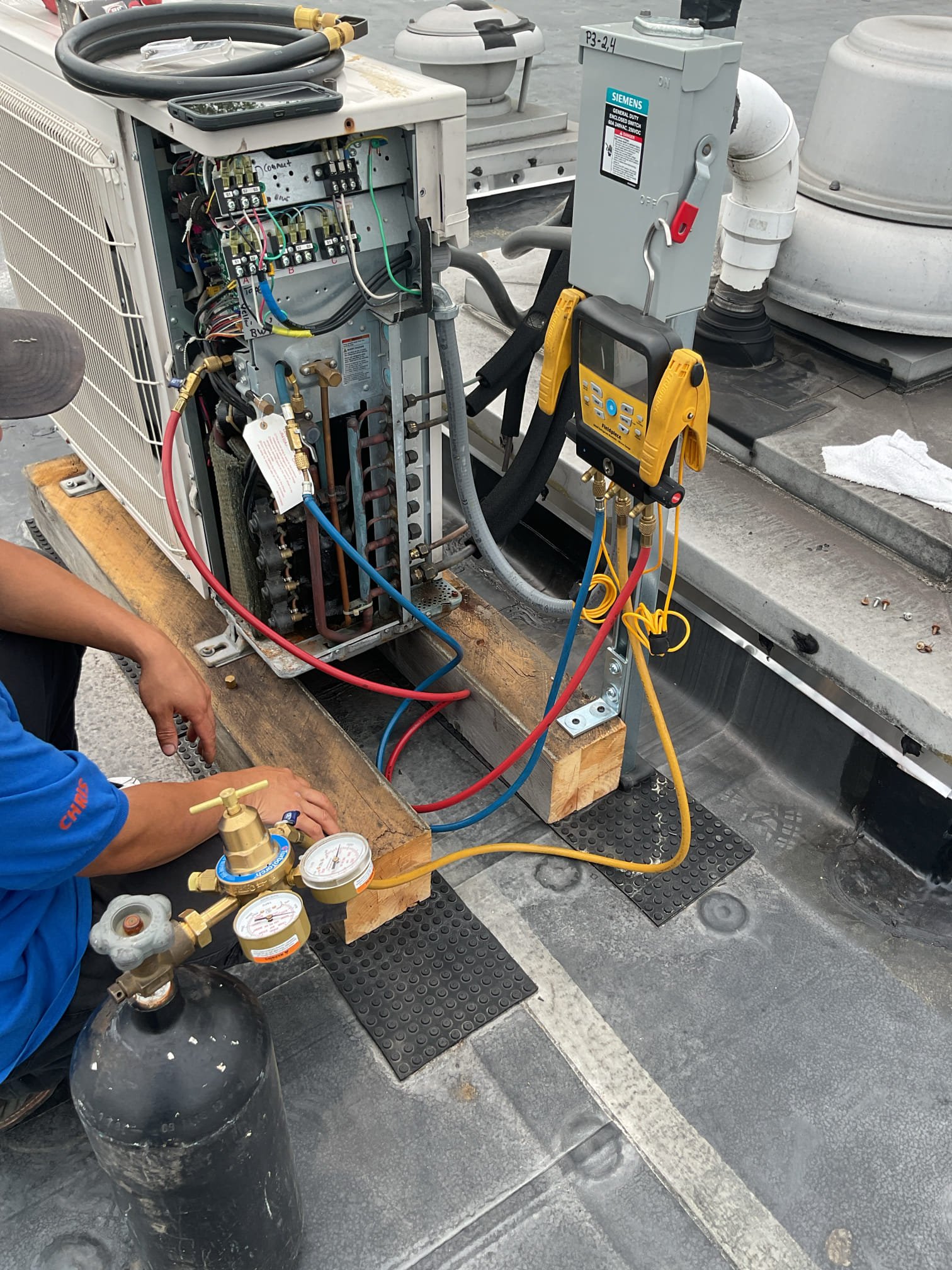
When your AC quits on a sticky Milton afternoon, the house heats up fast. Upstairs bedrooms get uncomfortable first, pets start looking for tile floors, and a problem that seemed minor in the morning can feel urgent by dinner.
Most air conditioning problems aren't dangerous, but some absolutely need fast attention. The hard part for homeowners is knowing the difference between a simple airflow issue and a real emergency AC repair situation. That decision matters because the wrong move, especially with electrical parts or a struggling compressor, can turn a repairable problem into a much bigger one.
The 5 Critical Signs of an AC Emergency
Some calls come in with a clear story. The system was cooling fine, then there was a loud bang, a burning smell, and now nothing runs. Other calls are murkier. The unit still turns on, but the air isn't cold, and water is showing up near the indoor equipment. Those are the moments when you need to stop guessing and look at the warning signs.
No cool air when the system is running
If the thermostat is calling for cooling and the system seems to be running, but the air coming from the vents isn't cooling the house, that's one of the most common reasons people call for emergency AC repair. Sometimes the issue is basic, like thermostat settings or a badly clogged filter. Sometimes it points to a larger failure involving refrigerant movement, electrical components, or the outdoor unit.
In Milton homes, especially older homes and triple-deckers, warm upper floors make this feel worse quickly. If you want a deeper look at one common version of this problem, this article on what to do if your air conditioning is not blowing cold air is worth reading. But if the house temperature keeps climbing and the system isn't bringing it down, it's time to treat it seriously.
Loud noises that are clearly not normal
A steady hum is normal. A brief click at startup can be normal, too. What isn't normal is grinding, screeching, banging, or hard metal-on-metal noise.
Those sounds usually mean a part is failing, loose, or binding up under load. A screech can point to a motor issue. Grinding often means moving parts are wearing badly. Banging can mean a component has broken loose or the compressor is struggling in a way it shouldn't. When the unit is making those sounds, keep running it, and you risk more damage.
Burning smell or other electrical odor
This is one of the clearest emergency signs. A musty smell can come from moisture and biological growth in the system. That's a service issue, but not usually a same-minute emergency. A burning, hot plastic, or electrical smell is different.
That odor can mean overheated wiring, a failing motor, or a component that's arcing. If you ever see sparking, hear sharp electrical snapping, or smell burning from the indoor or outdoor unit, turn the system off. Don't open panels, don't keep testing it, and don't reset it over and over.
Water where it shouldn't be
A little moisture around cooling equipment isn't unusual in the right place. A puddle on the floor, soaked insulation, dripping through a ceiling, or water pooling around the air handler is not something to ignore.
Water can come from a blocked condensate drain, frozen coil melt-off, or a larger system problem that's backing up moisture into the house. In some homes that water can damage ceilings, floors, or nearby finishes long before the cooling problem gets sorted out. If the leak is substantial, it has crossed from inconvenience into emergency territory.
The unit won't turn on at all
When the thermostat is set correctly, and the system is completely unresponsive, that's a stronger sign than many homeowners realize. No fan, no outdoor unit, no startup sound, nothing. That usually means the problem isn't comfort alone. It may involve power, controls, safety switches, or a failed component that has shut the system down.
A dead system on a very hot day is especially hard on households with small children, older family members, or anyone sensitive to heat. In those situations, emergency AC repair isn't about convenience. It's about restoring a safe indoor environment as quickly as possible.
What to Do Before You Call for Help
The safest approach is simple. Check the things a homeowner can check without opening equipment or working around live power. That can solve a basic issue, or at least give the technician a much clearer starting point.
Use a short pre-call checklist
A practical troubleshooting sequence is to verify the thermostat is set to Cool, confirm the setpoint is below room temperature, check the circuit breaker once, inspect the air filter, and then document the failure time, smells, noises, and any error codes before dispatching a technician. That workflow is specifically recommended to speed diagnosis and avoid repeated breaker resets or unsafe DIY work, as described in this emergency AC troubleshooting guide.
Here's the version I recommend homeowners follow:
Check the thermostat: Make sure it didn't get switched to Heat, Fan, or Off. Lower the setpoint below the room temperature.
Look at the breaker once: If it's tripped, reset it one time only. If it trips again, stop there.
Inspect the filter: A severely clogged filter can choke airflow and trigger other cooling problems.
Look around the outdoor unit: Clear away loose debris or anything obviously blocking airflow, but don't take the cabinet apart.
Write down what changed: Note when it stopped cooling, any odor, unusual sound, visible leaking, and any display code.
What not to do
In this situation, people accidentally make the call worse.
Don't keep resetting the breaker: If it trips again, the system is telling you something is wrong.
Don't remove access panels: That moves you from homeowner checks into electrical and mechanical service.
Don't hose down electrical sections: Water and energized components don't mix.
Don't force the system to keep running: A struggling unit can damage more expensive parts.
Don't ignore related equipment: If you manage a restaurant, store, or any property with temperature-sensitive equipment, cooling failures can spread beyond comfort. In those settings, it also helps to understand who handles related systems like emergency refrigeration unit repair.
What to Expect During an Emergency Service Visit
A good emergency call should feel organized, not chaotic. The homeowner gives a clear description. The technician confirms what failed. Then the conversation turns to whether the system can be stabilized today, repaired fully on site, or needs a return visit for parts.
What helps before the technician arrives
When you call, have the basics ready if you can:
What the system is doing: No cooling, no power, leaking, loud noise, burning smell.
When it started: Sudden failure matters. So does a problem that got worse over several days.
What you've already checked: Thermostat, breaker, filter.
Any visible details: Ice, water, blinking code, outdoor fan not spinning.
That saves time at the door and helps the dispatcher prioritize the call appropriately. If you need a local service option, AC cooling service in Greater Boston should include both diagnostics and repair support.
How the diagnosis usually works
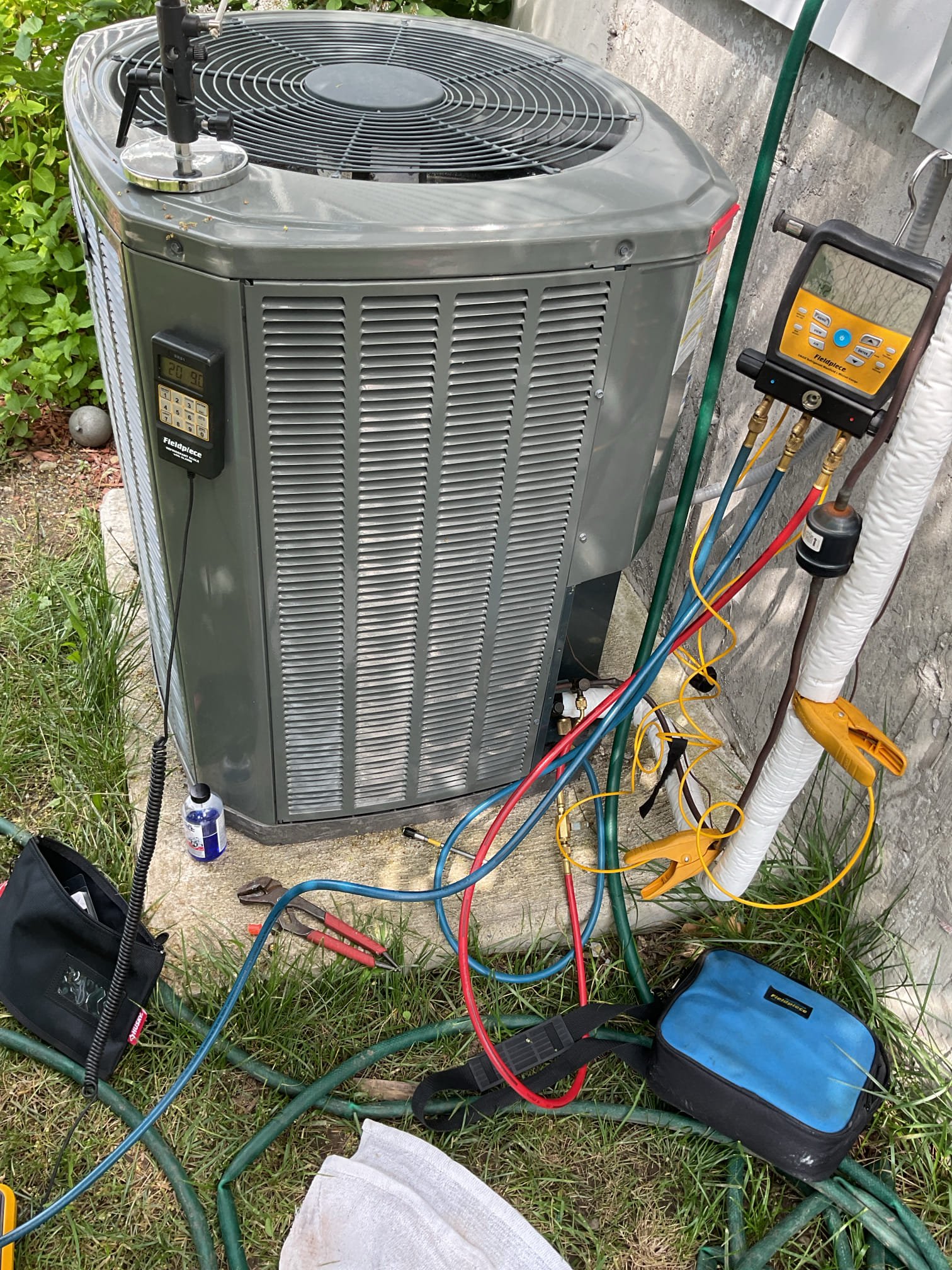
Technicians don't start by swapping parts and hoping. A structured response is more disciplined than that. Emergency HVAC checklists generally follow detect and assess → isolate and diagnose → escalate → temporary fix → recover and document, and the first move is to confirm the failure and determine whether any backup or redundant cooling is active, as outlined in this HVAC emergency response checklist.
In plain English, that means the technician is trying to answer a few questions in order:
Question | Why it matters |
Is the system actually failing, or is control logic stopping it? | This separates a dead component from a settings or safety shutdown issue. |
Can the problem be isolated safely? | Some faults let part of the system be tested without risking more damage. |
Is there a same-visit repair path? | If a common component failed, the unit may be repairable immediately. |
Is a temporary cooling solution possible? | In some cases, the goal is to stabilize conditions until the final repair is completed. |
Temporary fix versus full repair
Homeowners are often surprised by this part. Not every emergency visit ends with a permanent repair that same day, and that doesn't mean the visit failed.
Sometimes the immediate goal is to restore safe operation or confirm that running the system wouldn’t be a bad idea. If a drain issue can be cleared safely, cooling may come back right away. If a major electrical component failed or the compressor is involved, the right answer may be to shut the system down, protect the equipment, and schedule the final repair once the correct parts are available.
The best emergency service call doesn't just get the unit running. It tells you whether running it is smart.
Boston Budget handles residential and commercial cooling service in Greater Boston and the South Shore, including emergency support, diagnostics, and repair options for systems that stop cooling or shut down unexpectedly.
Understanding the Costs of Emergency Service
Emergency HVAC work costs more for reasons homeowners can usually understand once they're explained clearly. You're not paying only for the repair itself. You're paying for priority scheduling, after-hours availability, and a technician responding fast instead of fitting the call into a normal route.
Why emergency calls are priced differently
Emergency AC repair costs are higher than standard service calls because of after-hours labor, premium scheduling, and expedited response requirements. The same source notes that if a unit is allowed to fail completely rather than being addressed earlier, the eventual repair cost can be much higher than with proactive maintenance, according to these HVAC maintenance cost statistics.
That doesn't mean every urgent call turns into a huge invoice. It means emergency pricing reflects the inherent trade-off. You're moving to the front of the line, often at the hottest time of year, when technicians are already stretched, and many failures happen at once.
What affects the final bill
The total usually depends on a few practical factors:
Timing: Nights, weekends, and peak heat waves are different from weekday scheduling.
Failure type: A simple control issue is one thing. A major component problem is another.
System access: Tight attic installs, packed basements, and roof access can slow the work.
Parts availability: If the part is common and stocked, the repair path is easier.
For homeowners trying to budget realistically, a local overview of AC repair service costs can help frame the difference between routine and urgent service.
Paying for emergency service is frustrating. Paying for emergency service after avoidable damage spreads further is worse.
How to Prevent Future AC Emergencies
Most emergency AC repair calls start weeks earlier. The unit gets louder. Airflow drops off. The filter stays in too long. Water shows up once, then disappears, so nobody acts on it. By the time the system quits, the warning signs are already old news.
The habits that actually help
A few habits do more than people think:
Change filters on schedule: Restricted airflow stresses the whole system.
Pay attention to new sounds: A system usually warns you before it fails hard.
Don't ignore small leaks: Water problems rarely fix themselves.
Schedule routine service: A tune-up gives a technician a chance to catch weak electrical parts, airflow issues, and drain problems before the next hot stretch.
For Boston homes, timing matters
In Greater Boston and the South Shore, the first real heat wave tends to expose problems that were hiding through milder weather. That's why spring service matters. It gives you a chance to find the weak point before the system has to run hard for days at a time.
If your AC is already acting up, don't wait for a weekend breakdown. If it's running fine, keep it that way with regular maintenance and quick attention to anything that changes.
If your system stops cooling, starts leaking, or gives off signs that something isn't right, Boston Budget can help with emergency and scheduled cooling service in Greater Boston and South Shore communities such as Quincy, Weymouth, Braintree, Hingham, and Plymouth. Call or text the team to describe what's happening, and have your thermostat checks, filter condition, and symptom notes ready so the visit starts with the clearest possible picture.
Boston Budget is a locally owned plumbing, heating, and cooling company proudly serving homeowners in Boston, Quincy, Dorchester, Weymouth, and the surrounding communities. We specialize in boiler maintenance, heating repairs, and energy-efficient HVAC upgrade designed to keep your home safe, comfortable, and affordable, especially during harsh New England winters. With reliable service, transparent pricing, and fast response times, Boston Budget is your trusted local choice for plumbing and heating solutions.


