
Mini-Split Ductless Installation: 5 FAQs You Should Know
If you own a Boston-area home without ductwork, especially a triple-decker, an older condo, or a place with finished rooms added over time, you've probably run into the same problem. You want better comfort without opening walls all over the house. You also want heating that can handle winter and cooling that doesn't rely on window units.
That's where mini split ductless installation makes sense. A ductless system was built around a simpler retrofit path. AHRI explains that a ductless system can be operational within hours for simple installations because the installer sets the outdoor unit, drills a small hole, mounts the indoor head, connects the tubing and wiring, and installs the controller, which is a big reason these systems became a standard retrofit option in homes where adding full ductwork is difficult or expensive, as described by AHRI's overview of ductless mini-split systems.
That sounds straightforward, but the details matter. In Boston housing stock, wall construction, electrical capacity, condensate routing, and outdoor-unit placement can make the difference between a clean install that runs with low noise for years and one that gives you leaks, noise, or weak winter performance.
Your Top Questions on Ductless Mini-Splits Answered
Most homeowners asking about mini-splits are trying to solve one of three issues. They have no ducts, they have hot and cold rooms, or they're tired of patchwork heating and cooling that never feels consistent. In older Greater Boston homes, it's often all three at once.
Mini-splits became popular for exactly that reason. They let you add heating and cooling with far less disruption than a full ducted system, and they give you zoned comfort, which matters in homes with uneven sun exposure, finished attics, enclosed porches, or upper floors that behave differently from the rest of the house.
A lot of online guides make the job look simpler than it is. They show the mounting plate, the small penetration, and the finished indoor unit on the wall. What they usually skip is what savvy homeowners worry about:
Will it heat well in January: Boston winters expose weak equipment selection and poor commissioning fast.
Will the wall penetration leak: The opening carries the lineset, wiring, and condensate tubing, so drainage and sealing matter.
How many indoor units do I really need: More heads isn't always better if the layout is wrong.
What does the install day look like: Good prep changes the experience for the homeowner.
How do I hire someone who won't cut corners: At this stage, long-term performance is won or lost.
The five questions below are the ones I hear most from homeowners who've done some research and want real answers, not sales language. The goal isn't to make mini-splits sound effortless. The goal is to show what works, what doesn't, and what you should expect in an older Boston-area home.
How Do I Choose the Right Mini-Split System
Start with how the house lives in winter and summer. A system that works well in a newer open condo can disappoint in a Boston triple-decker with closed bedrooms, old windows, stack effect, and one room that is always five degrees off from the rest of the floor.
The first question is not brand. It is whether the layout supports the way a mini-split moves air. These systems do their best work in open areas or in rooms that can be treated as separate zones. They are less forgiving in chopped-up floor plans where homeowners expect one wall unit to push conditioned air around corners and through closed doors.
Single-zone or multi-zone
A single-zone system connects one outdoor unit to one indoor unit. It is often the better fit for a finished attic, a rear addition, a home office over a garage, or a top-floor room that never matched the rest of the house. Single-zone systems are also simpler to service, and they usually give stronger performance for that one space because the equipment is dedicated to it.
A multi-zone system connects several indoor heads to one outdoor unit. That can make sense when you want room-by-room control, but there is a trade-off. The design gets more complicated, the refrigerant piping runs get longer, and performance can feel less precise if the equipment is selected around head count instead of actual heating and cooling loads. If you are sorting out room count, this guide on how many air handlers you may need for a ductless mini-split installation will help you frame the decision.
A simple comparison helps:
System type | Usually fits best | Watch out for |
Single-zone | One problem room or one open area | Expecting one head to condition several closed rooms |
Multi-zone | Several separate rooms with different schedules or comfort needs | Adding heads where transfer air and layout still will not work |
Sizing and load calculation
Good equipment selection starts with a room-by-room load calculation. Square footage alone is not enough, especially in older Boston homes where one bedroom may have dense-pack insulation and replacement windows, while the room next to it still has drafty trim, little wall insulation, and afternoon sun.
I look at insulation levels, window type and orientation, ceiling height, air leakage, occupancy, and what sits above and below the room. A finished attic, a first-floor front parlor, and a bedroom over a heated kitchen can all be the same size and need different equipment.
Oversizing causes problems. The unit may short-cycle in cooling mode, leave the room damp, and miss the steady run time that makes mini-splits comfortable. Undersizing creates a different problem. The system runs hard, struggles on the coldest days, and leaves homeowners relying on backup heat more than they expected.
Efficiency and cold-weather performance
Efficiency ratings matter, but they should come after proper sizing and layout. A high-efficiency unit on paper will not fix poor head placement, a bad load estimate, or a system chosen for rebates alone.
For Boston-area homes, winter performance deserves close attention. Ask whether the proposed equipment is a cold-climate heat pump, what its heating output looks like at low outdoor temperatures, and whether the installer expects it to carry the full heating load or only part of it. That answer affects comfort, operating cost, and whether supplemental heat stays in the plan.
This matters even more in older housing stock. A well-insulated condo may do fine with a mini-split as primary heat. A drafty Victorian with radiator heat and uneven insulation may be better served by a hybrid approach, where the mini-split handles shoulder seasons and cooling while the existing system covers the harshest winter conditions.
Mass Save can also influence system choice, but it should not drive the entire design. Rebate eligibility, weatherization requirements, and the distinction between whole-home and partial-home installations can change what makes financial sense. A good proposal accounts for those program rules without forcing the house into the wrong equipment plan.
Focus on these four decisions as you compare options:
Match the system to the floor plan: Open living areas and closed bedroom layouts need different strategies.
Choose the right number of heads: More indoor units can solve comfort problems, but extra heads also add cost, complexity, and more line routing.
Confirm winter expectations: Make sure you know whether the system is intended for full heating, partial heating, or mostly cooling with bonus heat.
Keep controls practical: A system that is easy for the household to run usually performs better over time than one loaded with features nobody uses.
What Is the Ductless Installation Process Really Like
A professional install should feel organized, not chaotic. The crew should know where each unit is going, how the lines will travel, where the condensate will drain, and what needs to be protected before work begins.
Site selection and prep
The first decision is placement. The indoor head needs a location that allows good air throw, safe routing for the lineset, and dependable condensate drainage. In older Boston homes, that can rule out spots that look fine at first glance but create trouble once you open the wall or trace the exterior path.
The outdoor unit also needs real thought. It should have clear airflow and solid support, and the route between indoor and outdoor components should be practical to service later. An install that looks tidy on day one but leaves no access for maintenance isn't a quality install.
Mounting the indoor unit and drilling the wall
The sequence should be precise. A professional mini-split installation follows site selection, level mounting of the indoor head, drilling a small 2- to 2.5-inch wall penetration angled slightly downward, routing the lineset, setting the outdoor condenser, and then pressure-testing and evacuating the system before startup, as outlined in Southern Air's mini-split installation guide.
That wall opening sounds minor, but it's one of the most important parts of the whole job. The pitch matters for drainage. The location matters for appearance and serviceability. The sealing matters for moisture control and keeping the assembly tight.
Routing lines, drain, and wiring
Once the head is mounted, the installer routes the refrigerant lines, electrical cable, and condensate tubing through that wall penetration. Experience is paramount during this stage. In a newer home with easy exterior access, the route may be straightforward. In a brick building, a finished basement, or a third-floor unit with limited chase options, the route can require more planning.
Three things have to work together here:
Refrigerant line routing: The lines need protection, support, and a clean path.
Electrical connection: This is not a casual add-on. Power supply and disconnect details need to be handled correctly by the appropriate licensed professional.
Condensate management: Drainage has to remain reliable over time, not just on startup day.
If the indoor unit isn't level or the drain path is marginal, the system may still run, but it may not drain the way it should.
Setting the outdoor unit and commissioning
The condenser should sit on a stable pad or bracket with proper support. In Boston, where winter conditions matter, placement affects more than appearance. Snow, ice, roof runoff, tight side yards, and wind exposure all deserve attention when choosing the final location.
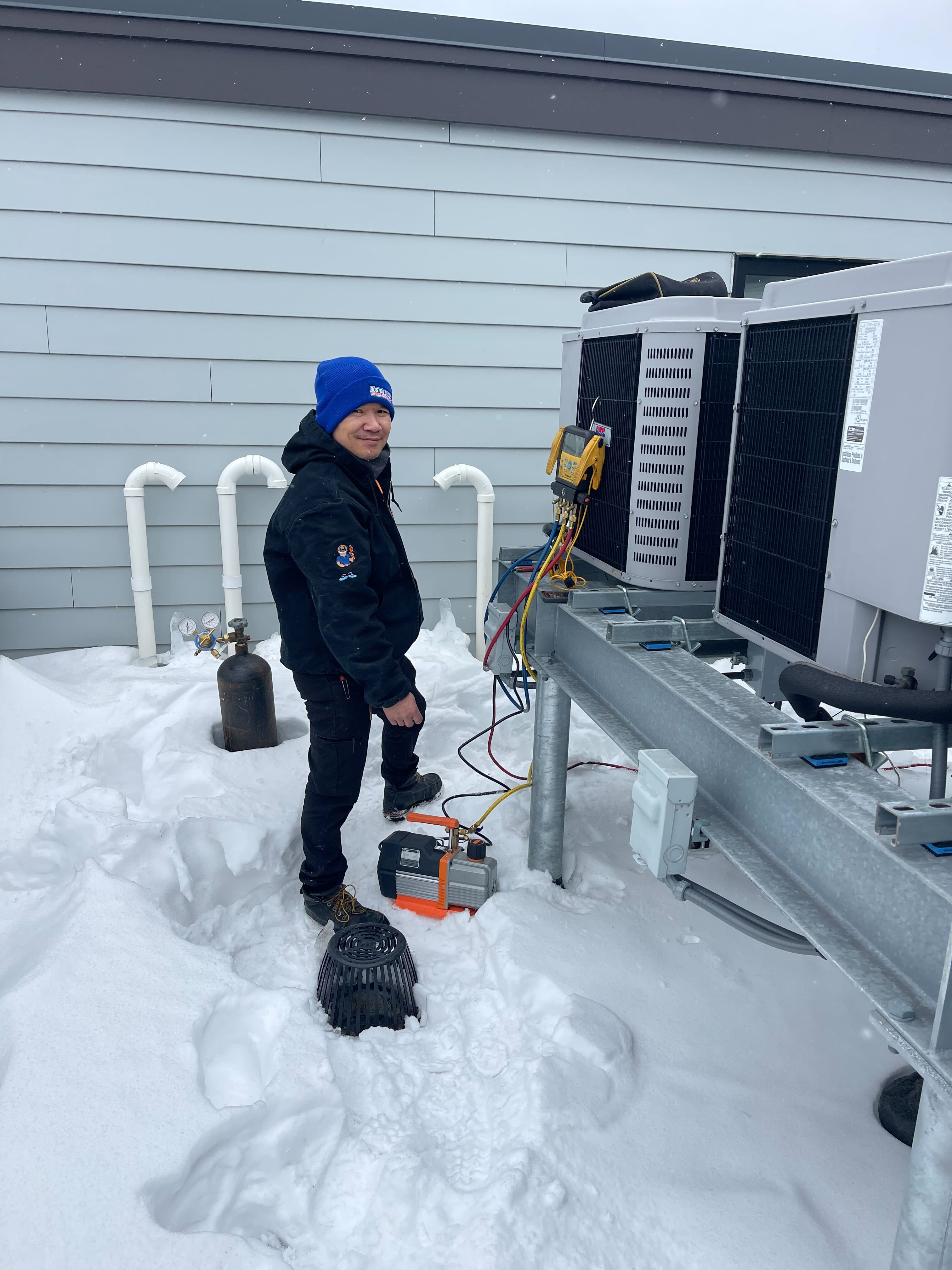
The last stage is the one homeowners don't always see, but it matters the most. The installer pressure-tests and evacuates the system before startup. That step helps confirm the system is leak-free and ready to operate efficiently. Skipping or rushing commissioning is one of the fastest ways to undermine a new install.
A typical install day often includes these checkpoints:
Protect the work area: Floors, nearby furniture, and traffic paths should be covered.
Confirm final placement: The homeowner should know exactly where heads, line covers, and the outdoor unit will sit.
Install and connect components: Indoor and outdoor equipment are mounted, routed, and wired.
Test and start up: The crew verifies operation, checks the drain path, and confirms the controls work.
Walkthrough: You should be shown how to use the controller, what maintenance you can handle, and when to call for service.
That's why mini split ductless installation shouldn't be treated like a simple wall-mount appliance job. The finished look matters, but the hidden details are what determine whether the system performs with minimal noise, drains correctly, and lasts.
What Is the Typical Cost for a Mini-Split Installation
A mini-split can be a modest one-room project or a full-house retrofit. In Boston, the spread is wide because the house often sets the price as much as the equipment does.
Carrier notes that installed mini-split costs commonly range from $2,500 to $15,000 , and Angi places average pricing around $3,000, with broad ranges for both single-zone and multi-zone work. Those numbers are useful for setting expectations, but they are not a substitute for a site visit. A triple-decker in Dorchester, a brick rowhouse in Somerville, and a Cape with an undersized panel in Quincy can all need very different labor, electrical work, and finish details.
The biggest cost swing usually comes from conditions hidden behind the walls and at the electrical panel. Older Boston-area homes often have plaster, masonry, tight side setbacks, patched-over framing, or service panels that are already full. A clean single-zone install with short line runs is one price. A multi-head system that needs careful routing, condensate pumps, exterior line-hide work, and panel upgrades is another.
The cost usually moves up or down based on a few practical factors:
System size and layout: One indoor head is simpler than several rooms tied to one outdoor unit.
Line-set routing: Longer runs, finished spaces, brick walls, and limited access add labor.
Electrical scope: A new circuit, subpanel work, or full panel replacement can change the job cost fast.
Drainage details: Gravity drainage is simpler. Pumped condensate adds parts, wiring, and future service points.
Mounting conditions: Wall brackets, snow-clearance stands, and vibration control matter in New England winters.
Finish work: Exterior appearance, line-hide placement, and patching standards affect labor.
For a more local pricing breakdown, review this mini-split installation cost guide for Boston homeowners before you compare proposals.
Rebates can change the actual number you pay. In Massachusetts, Mass Save incentives can make a well-designed project much more reasonable, but only if the equipment, sizing, installer paperwork, and project setup meet current program rules. Homeowners should ask about rebates early, not after the install is complete.
I also tell homeowners to read low quotes carefully. Sometimes the cheapest proposal leaves out electrical upgrades, permit costs, pump accessories, wall brackets, line-hide, or patching. Sometimes it includes equipment that will heat the space on paper but struggle in a Boston cold snap. Price matters, but scope matters more.
A fair mini-split price covers the full job. Proper sizing, clean routing, correct electrical work, drainage that will not become a problem later, and startup done by the book.
That is the actual trade-off. A lower upfront number can turn into higher ownership cost if the system is noisy, drains poorly, misses rebate requirements, or falls short in winter.
What Permits Are Needed for Mini-Splits in Massachusetts
Permit questions make homeowners nervous, mostly because nobody wants a surprise after the work starts. The practical answer is that permit requirements can vary by municipality, and your exact address matters.
In many Massachusetts communities, a permit is required for work involving HVAC equipment, electrical connections, or both. Your local building department or your licensed contractor can confirm what applies to your home. That's the safest way to handle it, especially in Boston-area properties where building type, occupancy, and prior alterations can complicate the picture.
Why permits matter
Permits aren't just paperwork. They create a basic framework for safety and accountability. With mini-splits, the job may involve electrical work, exterior penetrations, equipment mounting, and drainage details that should be checked against local requirements.
This matters even more in retrofit homes. The wall opening may be small, but it carries multiple components. A key concern in retrofits is that the pass-through hole carries refrigerant lines, electrical cable, and condensate tubing, and proper drainage depends on the indoor unit being level plus the wall penetration being sealed and angled correctly, as described in AC Service Tech's step-by-step mini-split installation guide.
What a homeowner should ask
You don't need to become your own permit expeditor, but you should ask direct questions before approving the work.
Who is pulling the permit: The contractor should explain whether they handle it and what inspections may follow.
Who is doing the electrical work: Mini-splits need proper power supply and connections, not shortcut wiring.
How will the wall penetration be sealed: This is a long-term moisture detail, not just a cosmetic one.
Will there be a final inspection: If your town requires one, ask how that gets scheduled and documented.
A reputable installer should be comfortable answering those questions. If the response is vague, rushed, or dismissive, that's a warning sign. In this kind of work, code compliance and workmanship go together.
How Do I Find a Qualified Mini-Split Installer
The installer matters as much as the equipment. A high-quality system can still disappoint if the unit is badly placed, the drain line is marginal, or the startup process is rushed.
Questions worth asking before you hire
Start with the basics. Ask whether the company is licensed and insured, who handles the electrical portion, and whether they regularly install ductless heat pumps in older homes. Experience with Boston-area housing stock matters because retrofit details are where many problems start.
Then get more specific:
Ask about winter performance: Installation quality directly affects heating results. Proper outdoor-unit placement, support, and commissioning are important for reducing nuisance defrost issues and winter capacity loss.
Ask about drainage planning: A clean-looking install isn't enough if the drain path is fragile.
Ask who handles permits: The answer should be clear.
Ask what startup includes: Pressure testing, evacuation, and functional testing shouldn't be optional.
Ask how they size the system: If they skip the house-specific evaluation, keep looking.
How to evaluate reviews and reputation
Homeowners often read reviews, but the useful part isn't the star rating alone. Look for patterns. Do customers mention communication, cleanliness, and follow-through? Do they describe how the company handled a problem, not just how fast they booked the job?
If you want a broader framework for sorting signal from noise, this playbook for managing your brand's reputation is helpful because it shows how online reputation works from both the business and customer side. That makes it easier to judge whether a contractor's review profile feels earned and consistent.
A good installer doesn't just get the system running. They leave you with a setup that drains properly, can be serviced, and makes sense for your house in January, not just on install day.
What a solid local option should offer
In practical terms, you want a contractor who can evaluate the layout, explain trade-offs, coordinate permitting where required, and install the system cleanly. For homeowners comparing local options, Boston Budget Plumbing's mini-split ductless service is one example of a Greater Boston contractor offering residential ductless installation and heat pump work, along with guidance on rebate-related questions.
The strongest companies also tend to share a few habits:
What to look for | Why it matters |
Clear written scope | Helps you compare quotes fairly |
Respect for finished spaces | Older homes need careful routing and cleanup |
Real retrofit experience | Prevents design mistakes in difficult layouts |
Strong communication | You should know where units and line covers will go before work begins |
A mini-split should feel like an upgrade, not a compromise. If the contractor can't explain placement, drainage, winter expectations, and service access in plain language, that's usually a sign the install process isn't as dialed in as it should be.
If you're planning a mini-split project in Greater Boston and want a clear, site-specific assessment, Boston Budget can help you sort through layout, installation approach, and next steps for your home.
Boston Budget is a locally owned plumbing, heating, and cooling company proudly serving homeowners in Boston, Quincy, Dorchester, Weymouth, and the surrounding communities. We specialize in boiler maintenance, heating repairs, and energy-efficient HVAC upgrade designed to keep your home safe, comfortable, and affordable, especially during harsh New England winters. With reliable service, transparent pricing, and fast response times, Boston Budget is your trusted local choice for plumbing and heating solutions.


