
Mini Split Installation Cost in Boston: A 2026 Guide
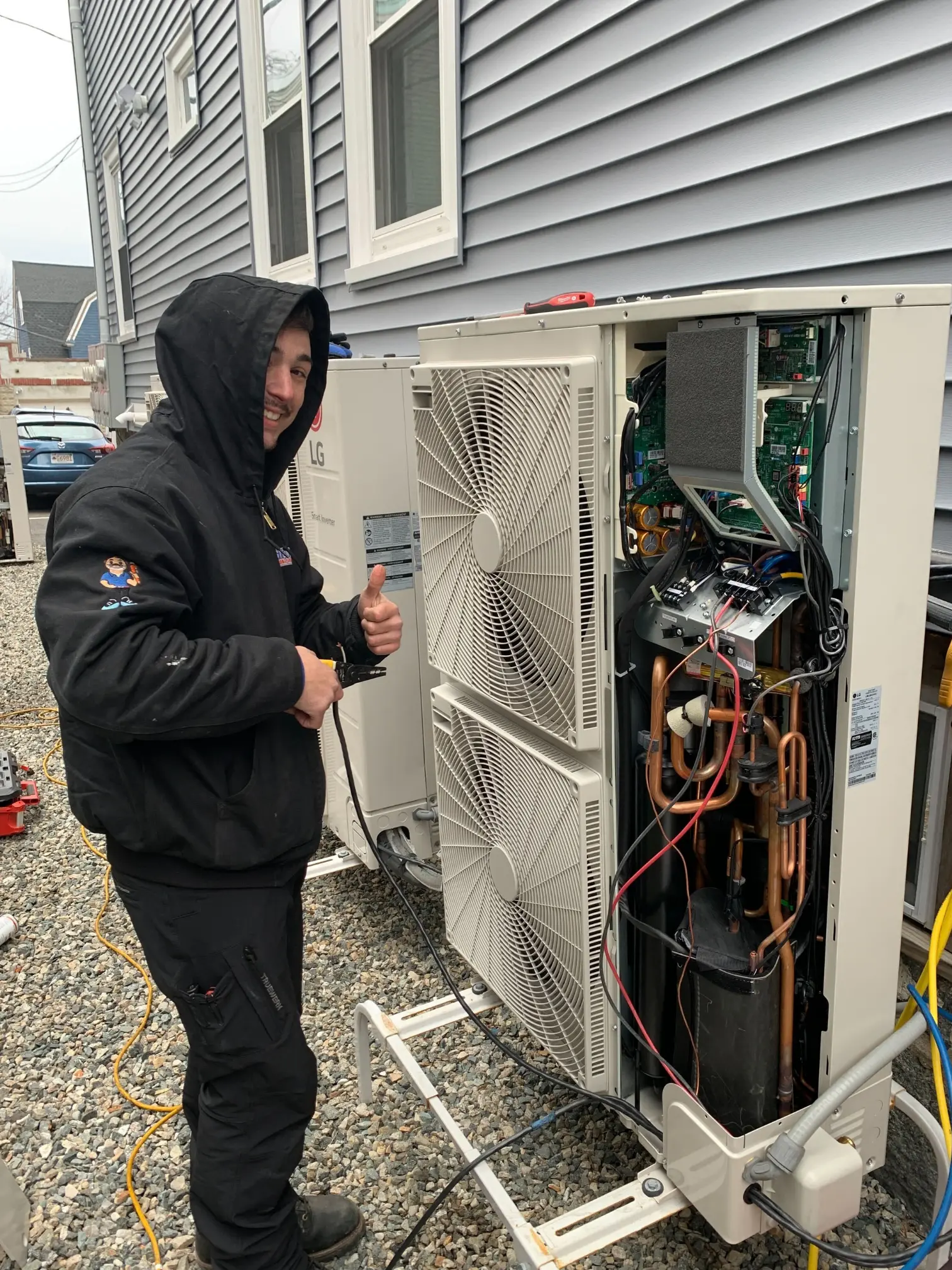
In the Boston area, the single-zone mini-split installation cost may fall around $3,000 to $7,500, depending on equipment, electrical readiness, line-set routing, permitting, and finish requirements. A simple installation may be lower, while older-home complexity can push the number higher. That range is real, but it’s also why so many homeowners get frustrated, because two homes that seem similar on paper can land at very different price points once the actual installation details come into focus.
If you're reading this, you might be dealing with a third-floor bedroom that turns into an oven every summer, a home office that never feels comfortable, or a triple-decker layout where ductwork just isn’t practical. Mini-splits solve those problems well, but the pricing can feel all over the map until you understand what’s being quoted.
In the field, the biggest confusion usually isn’t the equipment itself. It’s the hidden labor, the line routing, the electrical work, and the layout of the house. That’s where this guide matters. A good quote should make clear what you’re paying for, what drives the number up, and where there may be room to keep costs under control without cutting corners.
Why Are You Considering a Mini Split?
In Greater Boston, the call usually starts with one room.
It’s the top-floor bedroom in July. It’s the finished attic that never cools off. It’s the back addition that the main system can’t quite reach. In older homes, especially multi-family properties and homes without existing ductwork, people aren’t always looking to cool the entire building. They’re trying to fix a comfort problem in a specific part of the house without tearing walls apart.
That’s where a mini-split makes sense. It gives you targeted heating and cooling where you need it. You’re not forced into a whole-house duct project just to make one or two rooms livable.
Common Boston scenarios
A few situations come up again and again:
Third-floor heat problems: Older Boston homes often trap heat upstairs, even when the lower floors are fine.
Finished basements or attic offices: These spaces usually need their own temperature control because they behave differently from the rest of the house.
Triple-deckers and additions: Homes with awkward layouts often benefit from zoning instead of trying to push conditioned air from one central system.
Partial upgrades: Some homeowners want to improve one area now and plan future upgrades later.
A mini-split is often the right answer when the problem is local, not whole-house.
Mini-splits also appeal to homeowners who want a system that can cool in summer and provide heat in colder weather. That flexibility is a big reason people start comparing options, but then they hit the same question: why is one estimate reasonable and another much higher?
The price range is wide for a reason
A lot of online articles make the cost sound simple. In real homes, it isn’t.
The wide spread in mini split installation cost comes down to house conditions, system sizing, number of indoor heads, electrical readiness, and how difficult it is to run and conceal the line set. In Boston, older housing stock adds another layer. Plaster walls, tight chases, masonry, and aging electrical panels can turn a straightforward install into a much more involved one.
That doesn’t mean the higher quote is always the better quote. It does mean you need to understand what’s behind the number before you compare bids.
How a Ductless Mini Split System Works
A ductless mini-split has two main visible parts: an indoor unit, often called a head, and an outdoor unit, which houses the compressor and condenser. The two are connected by refrigerant lines, control wiring, and a drain.
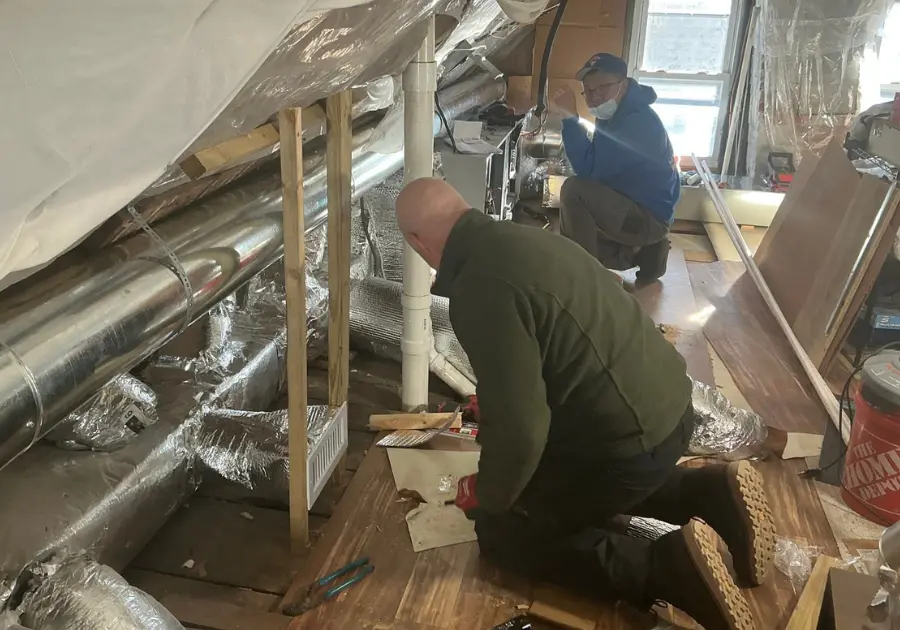
A mini split operates much like a refrigerator, working in reverse and forward depending on the season. In cooling mode, the system pulls heat out of the room and moves it outside. In heating mode, the heat pump moves heat from outdoors into the living space.
What the indoor and outdoor units do
The indoor head conditions the air in a specific room or zone. That’s why mini-splits work so well for targeted comfort problems. Instead of trying to push air through long duct runs, the unit serves the room directly.
The outdoor unit does the heavy lifting. It circulates refrigerant through the system so heat can be moved where it needs to go. One outdoor unit can serve one indoor head in a single-zone setup, or multiple heads in a multi-zone setup, depending on the system design.
Why homeowners keep choosing them
A mini-split isn’t just a wall-mounted AC. It’s a zoned comfort system.
That matters in homes where different rooms behave differently. A south-facing office may overheat, while a shaded bedroom stays cool. A mini-split lets those spaces be treated based on their actual load, not the average condition of the entire house.
The category keeps growing. The ductless mini-splits market report from Business Research Insights states that the market was valued at USD 19.38 billion in 2026 and is projected to grow at a CAGR of 8.2% from 2026 to 2035.
The rise in demand makes sense. Homeowners want room-by-room control, and many Boston homes aren't ideal candidates for adding full duct systems.
A few terms worth knowing
Zone: One room or area served by one indoor unit
BTU: A sizing measure used to match the system to the room or space
Heat pump: The technology that moves heat instead of generating it directly
Line set: The refrigerant piping that connects the indoor and outdoor units
Knowing those terms makes quotes much easier to read. It also helps you spot whether an installer is proposing a system that fits the home or just selling a box.
The Three Main Parts of Your Installation Cost
Every mini split quote can be boiled down to three buckets: equipment, labor, and materials. If a proposal feels vague, this is the framework to use when you ask questions.
For a single-zone system, the HomeAdvisor mini-split cost guide puts the average installed cost at $3,000, including the outdoor unit at $700 to $2,500 and the indoor unit at $400 to $1,000. It lists single-zone labor at $300 to $2,000 and multi-zone labor at $700 to $3,000, with total cost varying by system type, complexity, and installation conditions.
Equipment
This is the hardware itself.
It includes the outdoor condenser and the indoor air handler. If you’re installing more than one zone, equipment costs rise because you’re adding indoor heads and, in many cases, moving to a larger outdoor unit that can handle the combined load.
Brand and efficiency level also affect this category. Some homeowners focus only on the equipment price, but that can be misleading. Lower equipment cost doesn’t always mean lower installed cost if the job becomes more difficult to execute cleanly and safely.
Labor
Often, many homeowners underestimate the job.
Labor covers mounting units, drilling penetrations, running refrigerant lines, pressure testing, evacuating the system, making electrical connections, setting the outdoor unit, commissioning the equipment, and checking operation. In Massachusetts, code compliance and licensed trade work matter. That’s not optional.
A clean installation in an older Boston home can take real planning. Plaster, brick, limited access, and awkward unit placement all add time.
Practical rule: If one quote is dramatically lower, ask exactly what labor is included and what gets billed later as an extra.
Materials
Materials are the supporting parts that make the installation work.
That includes the line set, control wire, disconnect, condensate drain materials, mounting hardware, pad or brackets for the outdoor unit, and protective covers where needed. On some jobs, these details are minor. On others, they make a noticeable difference, especially when the run is long or the house requires a cleaner exterior finish.
Here’s a simple way to think about it:
Cost category | What it includes | Why it changes |
Equipment | Indoor and outdoor mini-split units | Zone count, brand, capacity, efficiency |
Labor | Installation, electrical connections, startup, testing | Layout, access, house age, complexity |
Materials | Line set, wiring, drain, brackets, pad, fittings | Distance, routing, finish requirements |
A solid estimate should show enough detail that you can tell whether the contractor has thought through the installation.
Key Factors That Determine Your Final Price
The final number on a mini-split quote comes from choices and constraints. Some are under your control, like how many zones you want. Others come from the house itself.
Number of zones
A single-zone system is the simplest install. One outdoor unit, one indoor head, one area to condition.
Once you move to two, three, or four indoor heads, the cost goes up because the job gets more complicated. There are more line runs, more electrical and drain considerations, and more labor coordinating the whole system. If you’re trying to figure out the right layout, this guide on how many air handlers you need for a ductless mini-split installation is a useful starting point.
Here’s a practical planning table:
Zones | Typical installed planning range | Notes |
1 zone | $3,000 to $7,500 | Depends heavily on routing and electrical readiness |
2 zones | $4,500 to $10,000+ | More line sets, drains, and indoor heads |
3 zones | $6,500 to $12,000+ | Depends on outdoor unit capacity and layout |
4+ zones | $8,000 to $15,000+ | Multi-zone design and routing become major cost drivers |
The table helps, but it doesn’t replace a room-by-room load assessment.
System size and BTU capacity
Size matters because the equipment and installation both change as capacity increases.
The Della Home mini-split installation cost guide notes that a 6,000 BTU system for a 150 to 250 sq ft room may cost $2,500 to $3,500, while an 18,000 BTU system for a 600 to 1,000 sq ft space may cost $4,500 to $6,500. The same source describes that as an 80% increase, tied to larger equipment and added installation complexity.
In real homes, that jump shows up in more than the condenser size. Larger systems can require different electrical planning, larger line sets, and more careful placement.
Efficiency and equipment tier
Higher-efficiency equipment usually costs more up front. That’s normal.
Where homeowners get tripped up is assuming high efficiency is always the right buy. Sometimes it is. Sometimes the better investment is a properly sized, well-installed system in a realistic efficiency tier rather than paying more for a top-end unit without understanding how long you plan to stay in the home or how the system will be used.
The quote should explain what level of equipment you’re getting and why it fits the application.
Brand and application fit
Some brands price higher than others. That alone doesn’t tell you much.
The better question is whether parts availability, installer familiarity, service support, and system design all line up with your home. A brand that looks cheaper online may not be cheaper once proper installation and support are factored in.
For Boston homes, especially older ones, fit matters more than brochure language. A system that’s easy to service, sized correctly, and installed cleanly will usually outperform a mismatched setup, even if the sales pitch sounded impressive.
Uncovering the Hidden Installation Costs
Most online calculators assume a simple house, a short line run, and no surprises. That’s not how a lot of Greater Boston installations go.
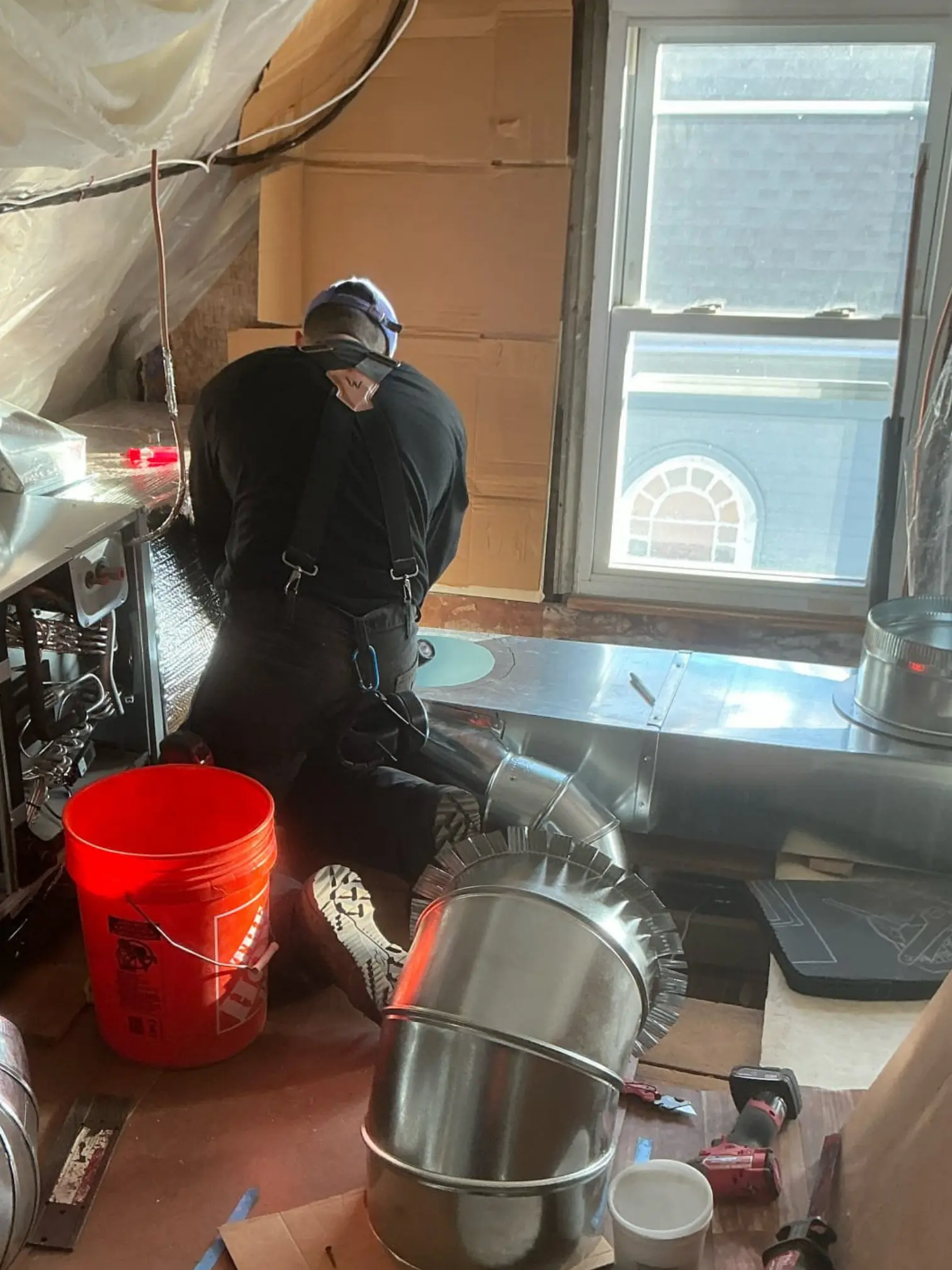
The wide range in mini split installation cost usually comes from variables the homeowner can’t see during the first walkthrough. The Osborne Heating and Cooling article on ductless mini-split installation cost points to two major ones: refrigerant line complexity and electrical panel upgrades of $500 to $2,000, with panel upgrades needed in an estimated 30% to 40% of pre-1980s homes.
Line set distance and routing
This is one of the biggest hidden factors.
A straightforward same-floor install with a short exterior run is one thing. A second-floor bedroom on the opposite side of the house is another. Every extra foot of line adds material, but difficult routing particularly adds labor. The challenge isn’t just distance. It’s getting the run there cleanly, protecting the line set, and avoiding a messy finished result.
In Boston homes, installers often have to work around plaster, masonry, old framing, tight side yards, and sightline concerns. That’s why two homes with the same number of zones can price very differently.
Long line runs don't just add copper. They add planning, finishing work, and installation time.
Electrical upgrades in older homes
A lot of Boston-area homes were built long before mini-splits were a common retrofit.
If the panel is full, undersized, or not set up for the new load, the project may need electrical work before the mini-split can be installed safely. Homeowners often miss this because the online estimate only talks about the HVAC equipment.
If you’re considering a broader heat pump installation for your home, this issue comes up even more often. It’s one reason an on-site evaluation matters so much in older housing stock.
Drainage and finish details
Condensate has to go somewhere. If gravity drainage isn’t practical because of the head location, installers may need a condensate pump or a different routing plan.
Then there’s the finish quality. Some homeowners are fine with a visible exterior line-hide. Others want a cleaner route with more concealment. Those decisions affect labor and materials. They aren’t fluff. They change the scope of the job.
Why calculators fall short
Online tools are useful for ballpark planning, not budgeting.
They rarely know if your outdoor unit has to sit in a tight alley, whether the line set has to cross a long facade, or whether the electrical service is ready. Those details can swing the estimate more than the model number itself.
A realistic quote should identify these issues early. If it doesn’t, there’s a good chance the “cheap” number won’t stay cheap.
Why Your Choice of Installer Matters Most
Homeowners sometimes compare mini-split quotes as if they’re comparing identical appliances. They’re not. They’re comparing workmanship, design judgment, electrical planning, refrigerant work, startup procedure, and how carefully the installer intends to handle the home.
What good installation actually includes
A proper installer doesn’t just hang a unit on a wall.
They evaluate placement, line routing, drainage, electrical requirements, outdoor unit location, service access, and how the finished job will look. They pressure test, evacuate the system correctly, make proper electrical connections, and confirm operation before the job is done.
That’s why the lowest number can be the most expensive decision in the long run. Poor installation can lead to drainage issues, performance problems, callbacks, and a system that never quite feels right.
What to ask before you hire anyone
Use these questions when comparing contractors:
Licensing and insurance: Ask whether the company is properly licensed and insured for HVAC and related work in Massachusetts.
Scope clarity: Ask what is included in the quote, especially electrical work, line-hide, drainage components, and startup.
Permits and local compliance: In many Massachusetts communities, permit requirements can apply. Your contractor or local building department can confirm what’s required for your address.
Service after installation: Ask who handles warranty support and future service if the system needs attention.
If you’re curious how reputable contractors build their pipeline and present estimates professionally, this article on how companies generate predictable HVAC leads gives a useful look at the business side of consistent service operations.
For homeowners comparing local options, Boston Budget Plumbing’s mini-split ductless service page outlines the type of work involved in residential installs and service. The important part is the process: clear evaluation, transparent scope, and installation that respects the house as much as the equipment.
Frequently Asked Questions About Mini Splits
Will a mini-split lower my energy bills?
It can, especially if you’re replacing an older, less efficient way of heating or cooling a problem area, or if you want to condition only the rooms you use. But no honest contractor should promise a specific savings number without knowing the home, your usage habits, utility rates, and what system the mini-split is being compared against.
What matters most is proper sizing and installation. An oversized or poorly installed system won’t deliver the performance homeowners expect.
Can I install a mini-split myself?
This is not a good DIY project.
Mini-splits involve refrigerant handling, electrical work, drainage, mounting, vacuum procedures, and startup checks that affect both safety and performance. In Massachusetts, electrical and mechanical work should be handled by the appropriate licensed professionals. A DIY install can also create warranty issues, poor efficiency, and code problems that are expensive to correct later.
How do rebates and incentive programs fit into the cost?
Programs can make a difference, but the details depend on the equipment, the home, and current program rules. In 2026, Mass Save lists air-source heat pump rebates by project type and system size: Whole-Home rebates at $2,650 per ton up to $8,500, Partial-Home rebates at $1,125 per ton up to $8,500, and Basic rebates at $250 per ton up to $2,500. Eligibility depends on equipment, installation type, heating use, and program rules, so homeowners should confirm details directly with Mass Save and their installer. Homeowners should always confirm current eligibility and requirements directly through the relevant program and with their installer during the quoting process.
Is one multi-zone system always better than several single-zone systems?
Not always.
A multi-zone setup can make sense when you want one outdoor unit serving multiple rooms, but there are homes where separate single-zone systems fit the layout better or simplify routing. The right answer depends on the building, access, room loads, and how you want to stage the project.
How should I compare two quotes?
Focus on scope before price.
Make sure both quotes address the same number of zones, similar equipment class, electrical needs, drainage, line routing, startup, and finish work. If one contractor has accounted for real house conditions and the other hasn’t, the lower quote may only be lower because key work is missing.
If you’re planning a mini-split project in Greater Boston and want a quote that accounts for actual house conditions, not just the catalog price, contact Boston Budget Plumbing, Inc. Their team handles residential and light commercial heating and cooling work across the area, including mini-splits and heat pumps, and can walk you through equipment options, installation scope, and what may affect the final cost at your property.
Boston Budget is a locally owned plumbing, heating, and cooling company proudly serving homeowners in Boston, Quincy, Dorchester, Weymouth, and the surrounding communities. We specialize in boiler maintenance, heating repairs, and energy-efficient HVAC upgrade designed to keep your home safe, comfortable, and affordable, especially during harsh New England winters. With reliable service, transparent pricing, and fast response times, Boston Budget is your trusted local choice for plumbing and heating solutions.


